
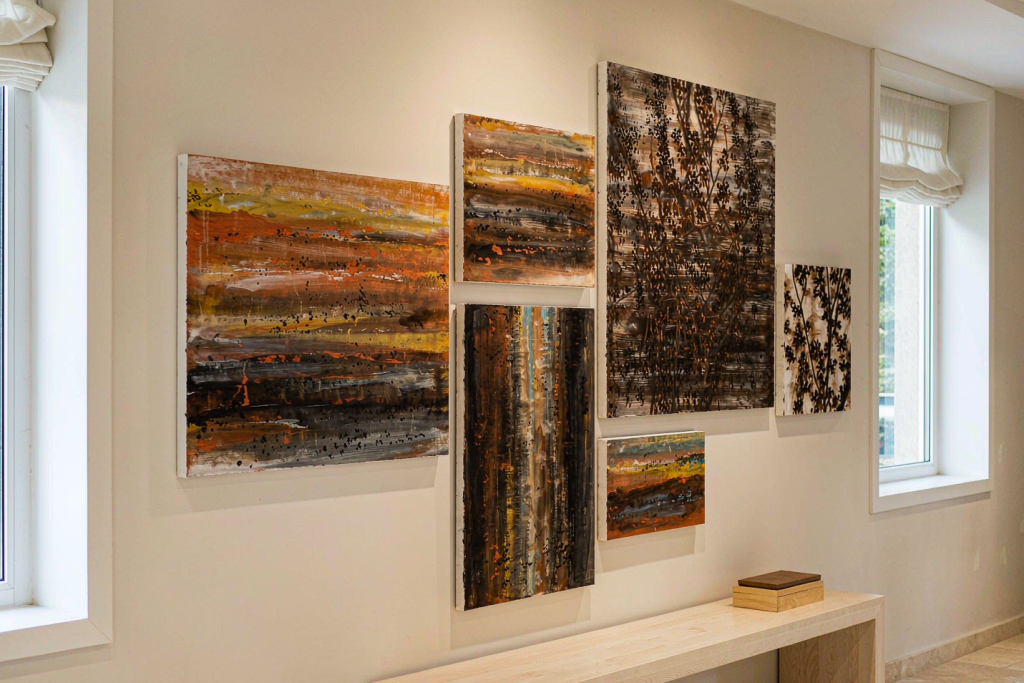
A hotel rollout or a retail chain refresh is not simply a larger wholesale order. The same image may be repeated across many rooms, several sizes may share one frame profile, and cartons may go to more than one address. Most problems on project orders come from details that were never written down, not from the painting itself. Use the checklist below before production starts.
Define the Set, Not Just the Single Piece
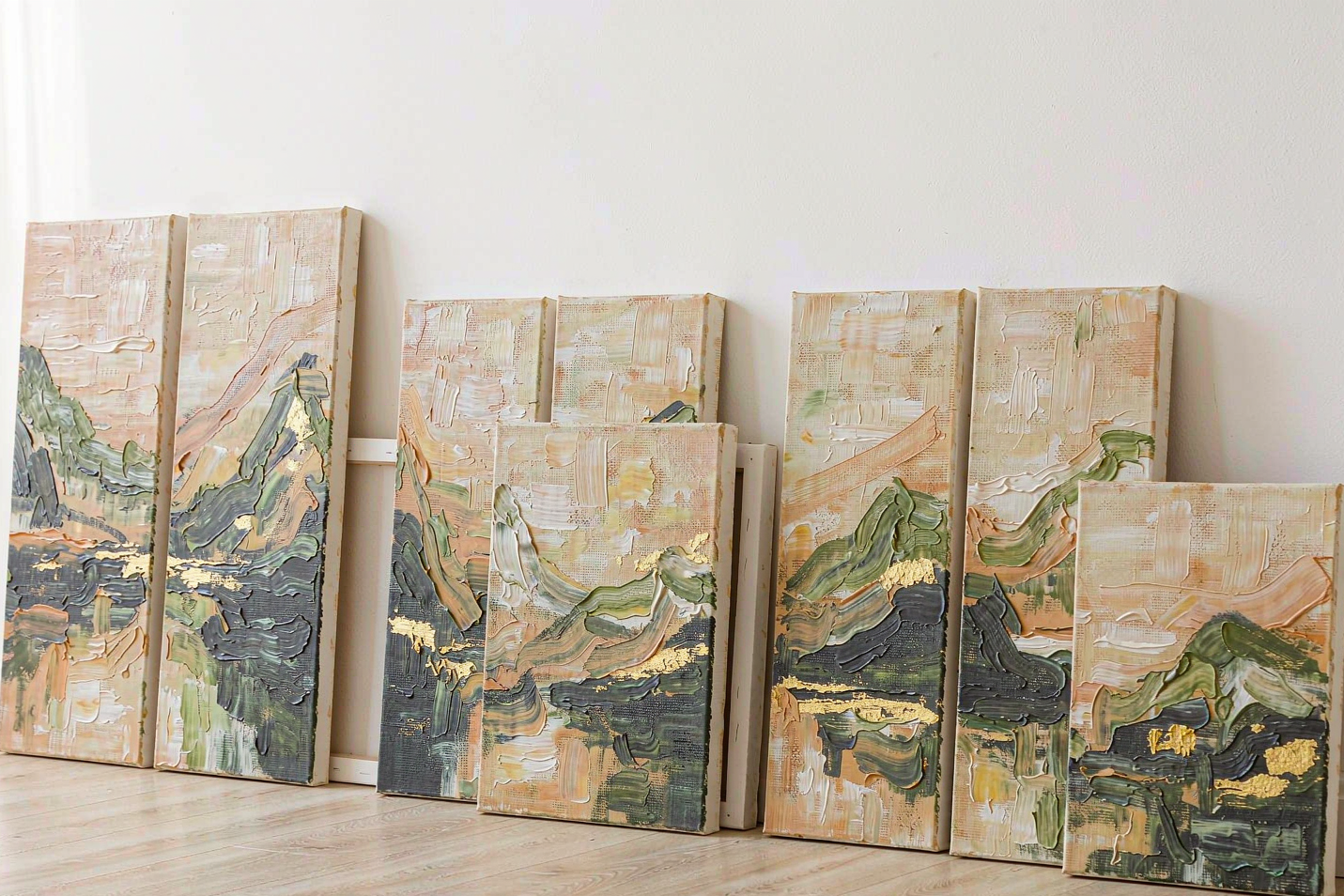
Start with a set list instead of a list of individual artworks. For each room type or store zone, record which image goes where, its orientation, its finished size and whether it repeats another line. Mark clearly which pieces are repeats of one design and which are one-off custom work, because the two are approved and packed differently. A simple matrix that maps zone, image reference, size and frame profile to each line is more useful to a workshop than a mood board. If one design is used in several zones at different sizes, say so in writing so the composition is scaled once, not once per size.
Lock the Physical Specification Before Production
Agree on canvas, stretcher bars, paint and surface finish in plain words, and confirm whether quoted sizes refer to the stretched canvas or the finished framed piece. Note the hanging hardware and whether it is fitted in the factory or on site. Strong lighting in public areas changes how a surface reads, so confirm the gloss level against the installation light rather than a studio photograph. Ask your supplier to print the specification on the order sheet. Our hand-painted canvas wall art is made to order, so that sheet is the reference the workshop works from.

Agree on a Written Colour and Finish Reference
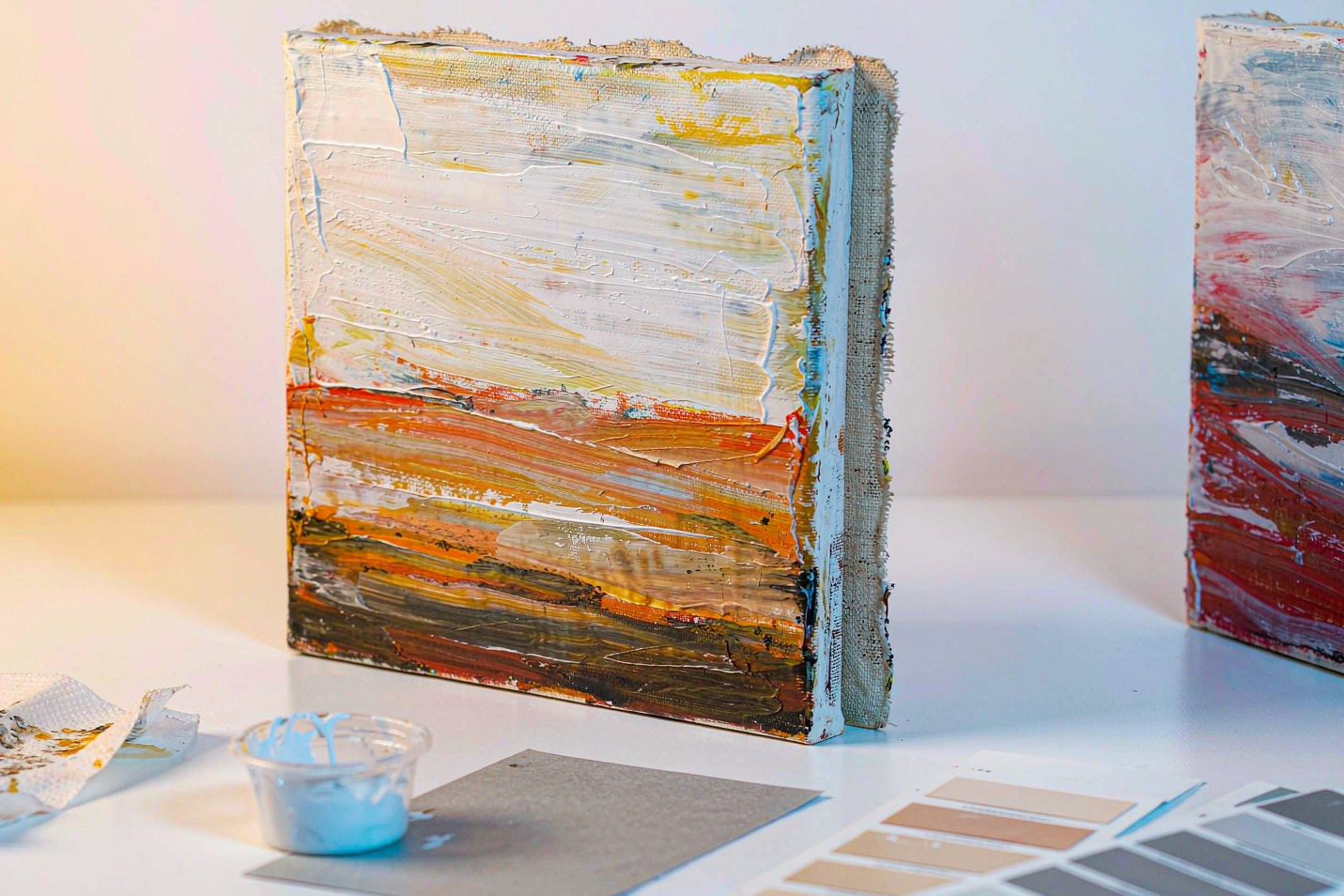
For a project, “close to the sample” is not a specification. Name one approved sample as the reference and record its ID on the purchase order, then compare every batch against that same piece. Decide who signs off, in what form, and what happens if a revised design is issued mid-project: retire the old reference so two versions are not in circulation at once. View the approved sample under the lighting used on site, since a colour that reads correctly in a studio can shift in a warm lobby or under retail spotlights. Keep photo approvals and change notes in one thread so the approval path stays auditable.
Packaging and Labelling for Multi-Site Delivery
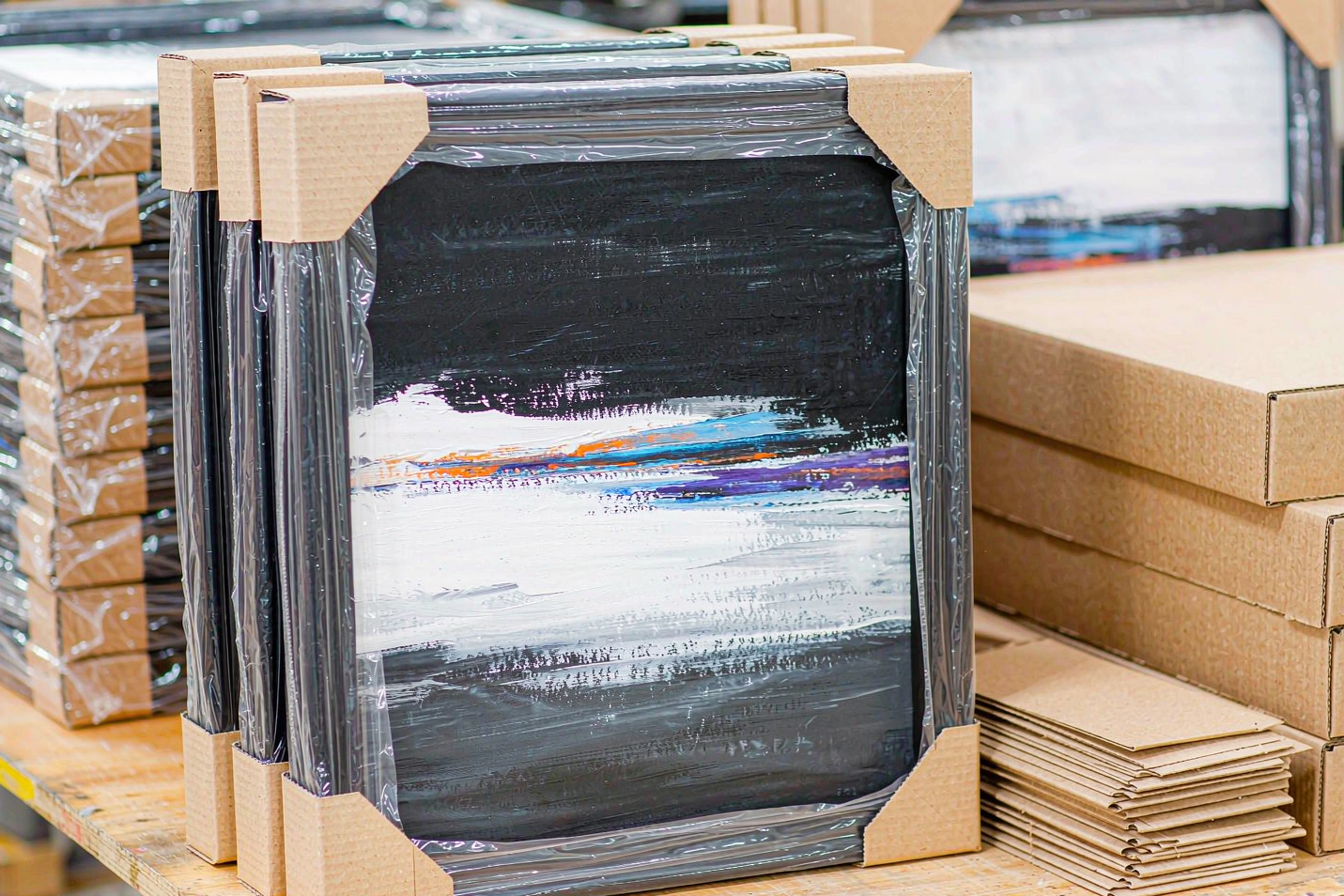
Confirm the packing method in writing. At our factory each piece is sealed in a vacuum-shrunk plastic bag with corner protectors fitted before shrinking. For multi-site projects the label often matters more than the wrap: ask that every carton carry the set ID, zone or room type and destination address, and that the packing list matches the set list line by line. A site team can then distribute cartons without opening each one to identify the artwork. Ask how split shipments will be marked, and record it on the order rather than relying on notes added later. You can read more about our Fuzhou factory.
None of this is specific to one supplier. Jinyi Art has made hand-painted oil paintings and canvas wall art for wholesale and custom orders since 1998, and the projects that run smoothly are the ones where the set list, the specification and the packing labels were agreed in writing before production.