
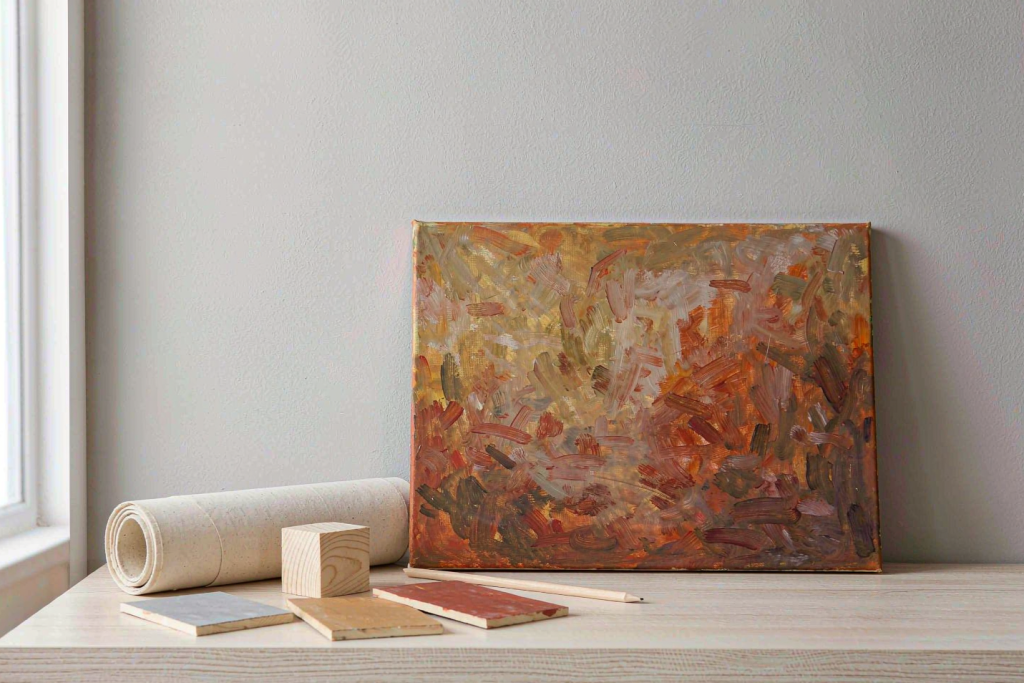
A wholesale wall art order usually arrives with a size, a quantity and a reference image. The material details sit on another line of the spec sheet, and they are the ones most often marked as standard – a word that means different things in different workshops. Canvas, frame and paint choices shape how a piece hangs, how it looks under project lighting and how it survives shipment. Here is what to confirm in writing before production starts.
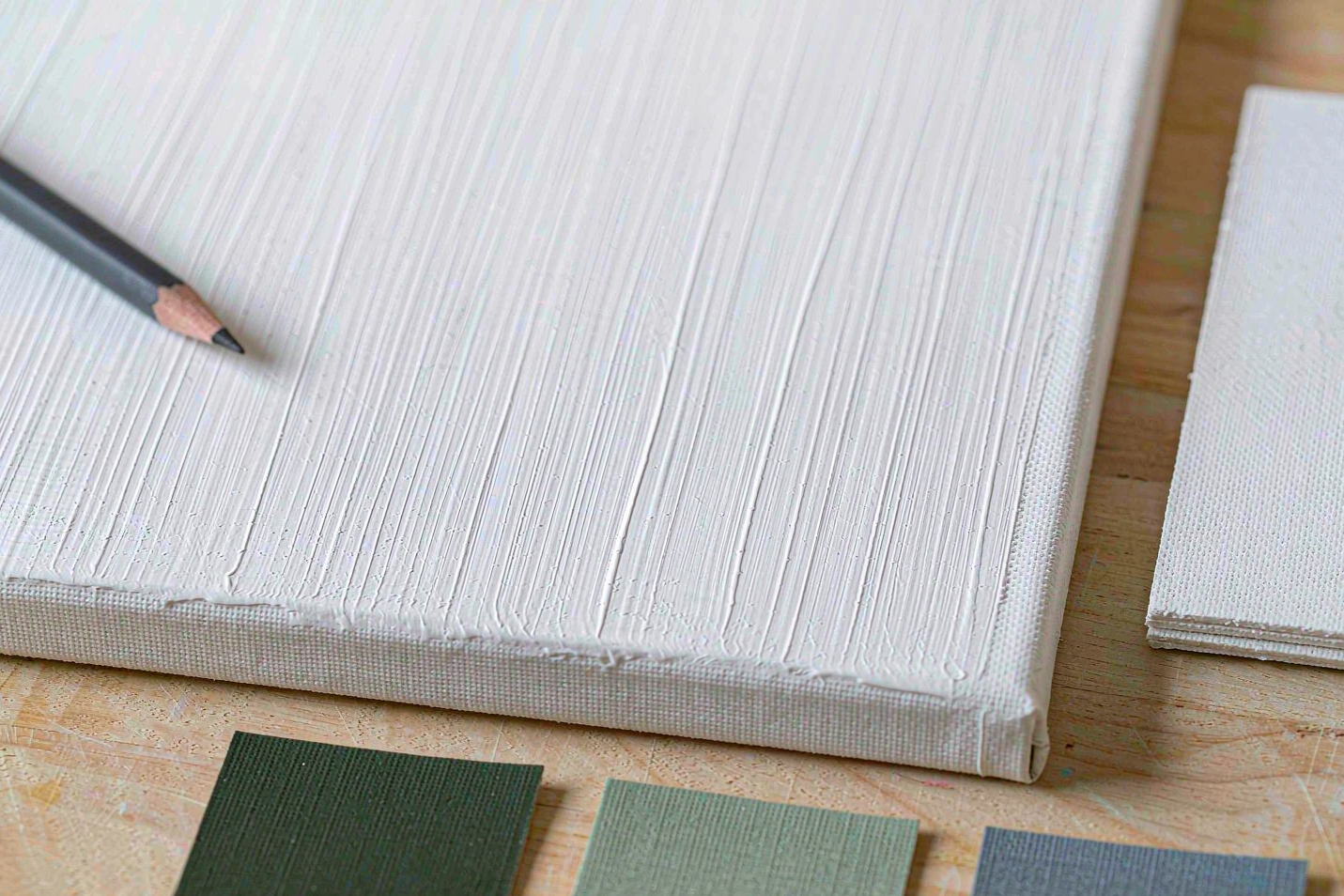
Canvas: confirm the ground, not just the weave
Ask what the canvas is made of – cotton, linen or a blend – how tightly it is woven, and which primer sits under the paint. A primed surface takes colour differently from a raw one, and the weave stays visible through thin brushwork. Ask for a physical offcut from the production batch rather than judging texture from a photograph; a screen flattens the detail you are trying to approve. If the piece will be supplied rolled rather than stretched, say so early.
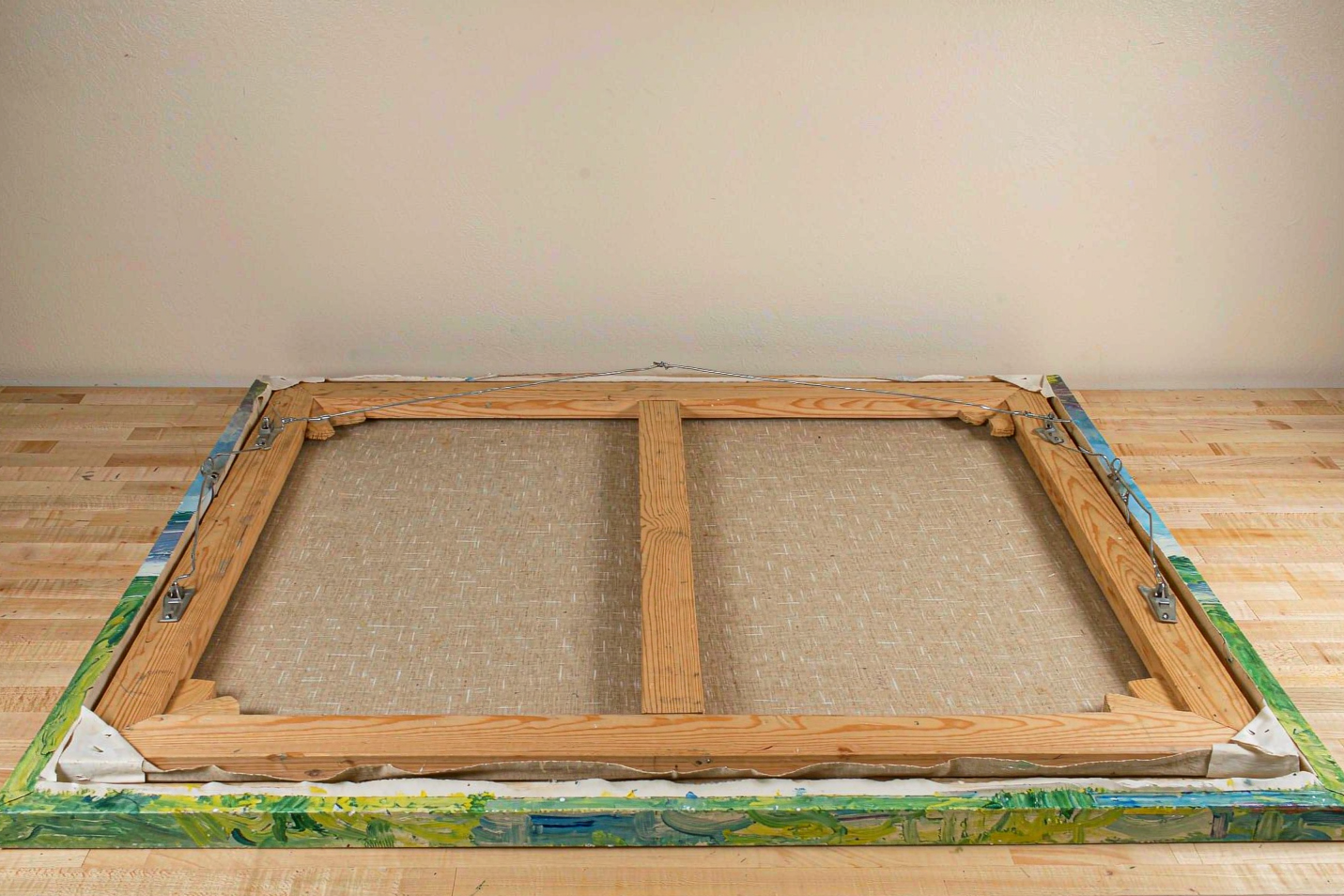
The stretcher frame behind the canvas
The frame is invisible in the finished photograph, which is why it gets skipped. Confirm whether the bars are kiln-dried, how the corners are joined, and whether larger pieces get cross-bracing. Ask whether hanging hardware is fitted and on which edge – that line decides how a corridor set or retail display is installed. Agree the edge treatment too: a gallery wrap that carries the image around the sides, a clean painted edge, or an outer frame added locally. A frame that moves in transit shows up as a wave in the canvas, so this is a material question.
Paint medium and surface finish
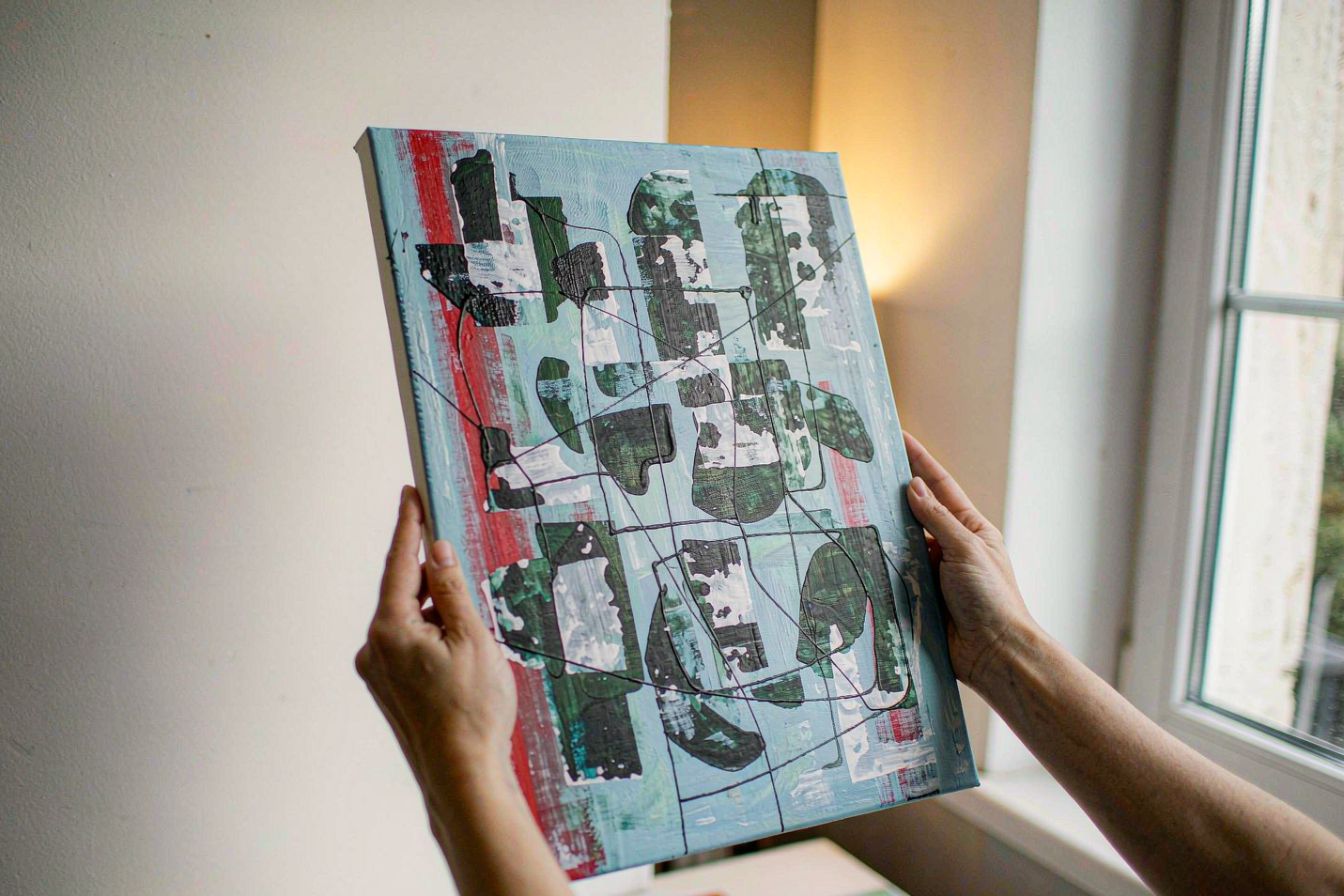
Oil and acrylic differ in drying time, sheen, how colour settles and how the finished surface can be cleaned. Neither is automatically better; the right choice depends on where the art will hang. Confirm whether a varnish or protective coat is applied, and at what sheen – matte, satin or gloss. Under retail spotlights, an unagreed gloss level is the usual surprise on installation day. Ask to see the finish on the approval sample under neutral daylight and under the warm light of the actual space.
Freeze the details into an approval sample
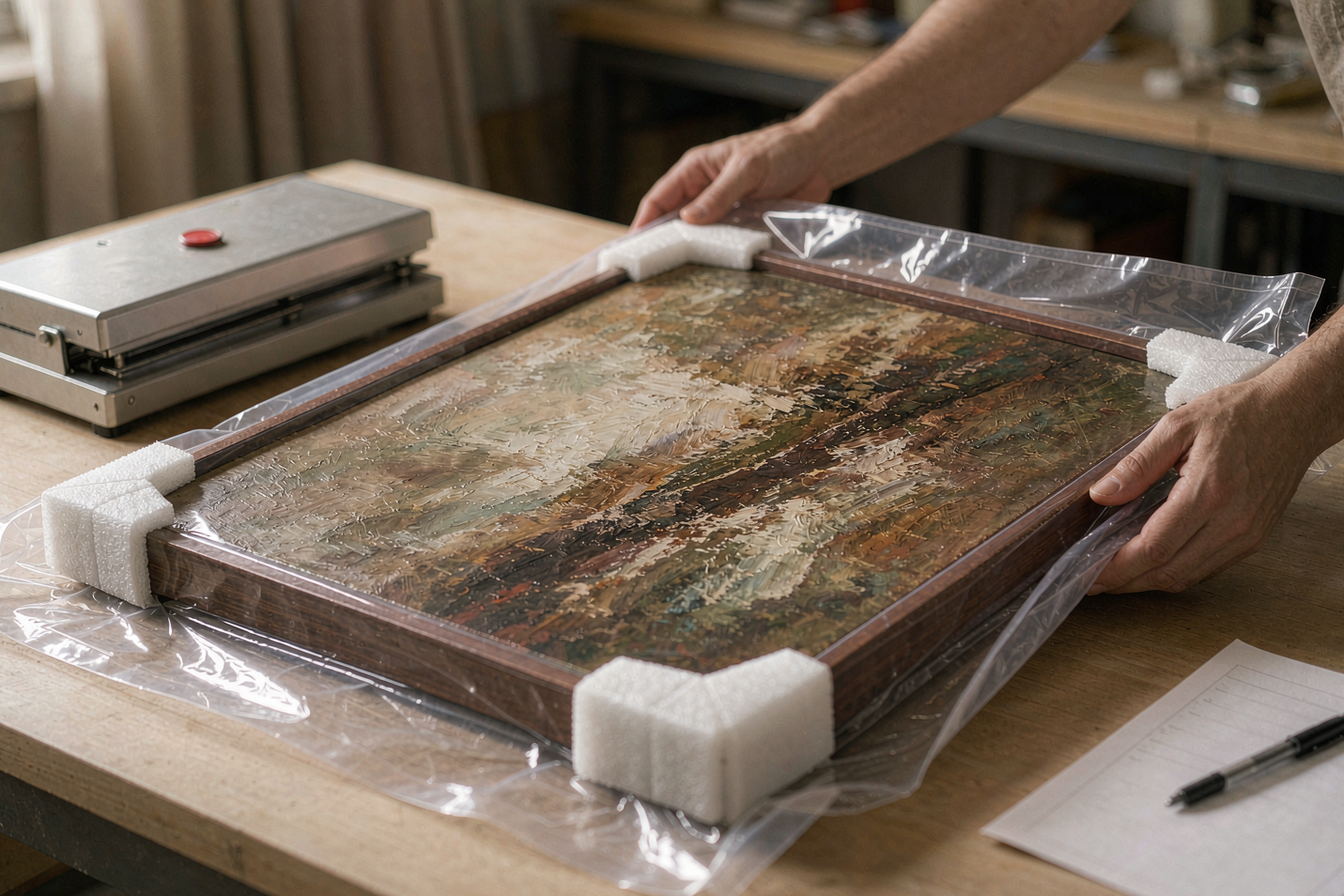
Put every material item on one sheet and attach it to the signed sample: canvas and primer, frame construction, medium, sheen, edge treatment and hardware. Use the same sheet at goods-in inspection. When sample and shipment are checked against identical lines, a difference is something you can point to, not an argument about taste. Keep packing on that sheet too. Our own orders ship in a vacuum-shrunk plastic bag with corner protectors fitted before shrinking, so both specs should describe the same physical piece.
A short material checklist
- Canvas fibre, weave and primer, plus a physical sample from the production batch
- Stretcher bar material and joinery, cross-bracing on large sizes, and hanging hardware
- Edge treatment, and whether an outer frame is included
- Paint medium, protective coat and the agreed sheen level
- One signed approval sample and one matching inspection sheet
None of these lines needs a brand name or a figure; they just need writing down. Jinyi Art has produced hand-painted oil paintings and canvas wall art in its Fuzhou factory since 1998, and the smoothest orders settle the material spec before the first brush touches the canvas. See the formats we work in on our products page or read about our Fuzhou factory.