
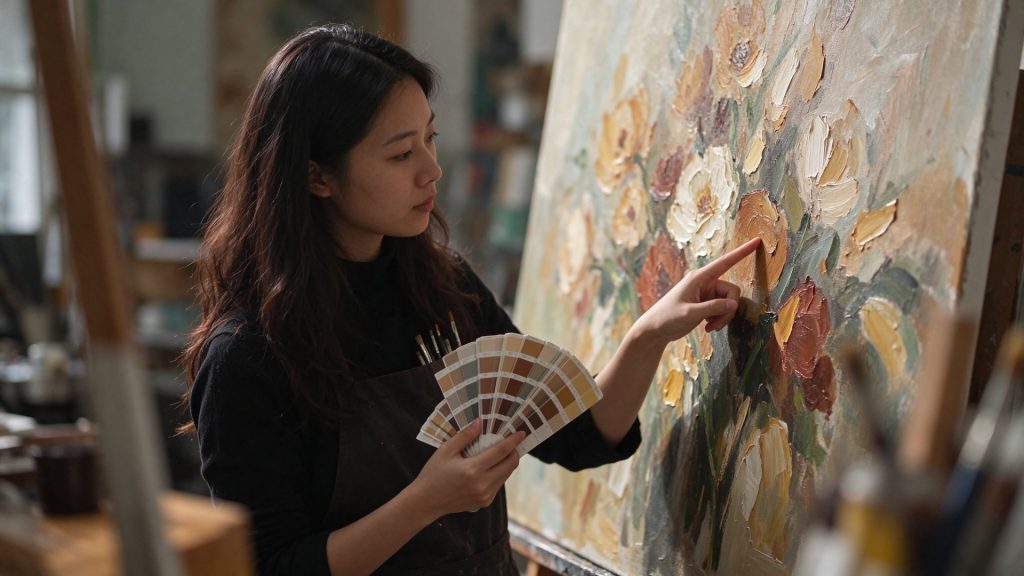
For wholesale buyers of hand-painted canvas wall art, the hard part of a repeat order is rarely the design. It is getting the same colour again. Every piece is painted by hand, so small tonal shifts are normal; what needs managing is how both sides define “the same” before production starts. A clear brief costs little to write and avoids a long email thread later.
Agree on one master reference
- Nominate a single reference: one physical approved sample, or one clearly lit photograph. A folder of images taken under different light gives the painter conflicting targets.
- Say which areas actually matter — a background tone, a brand accent colour, a group of neutrals. Not every square centimetre has to match.
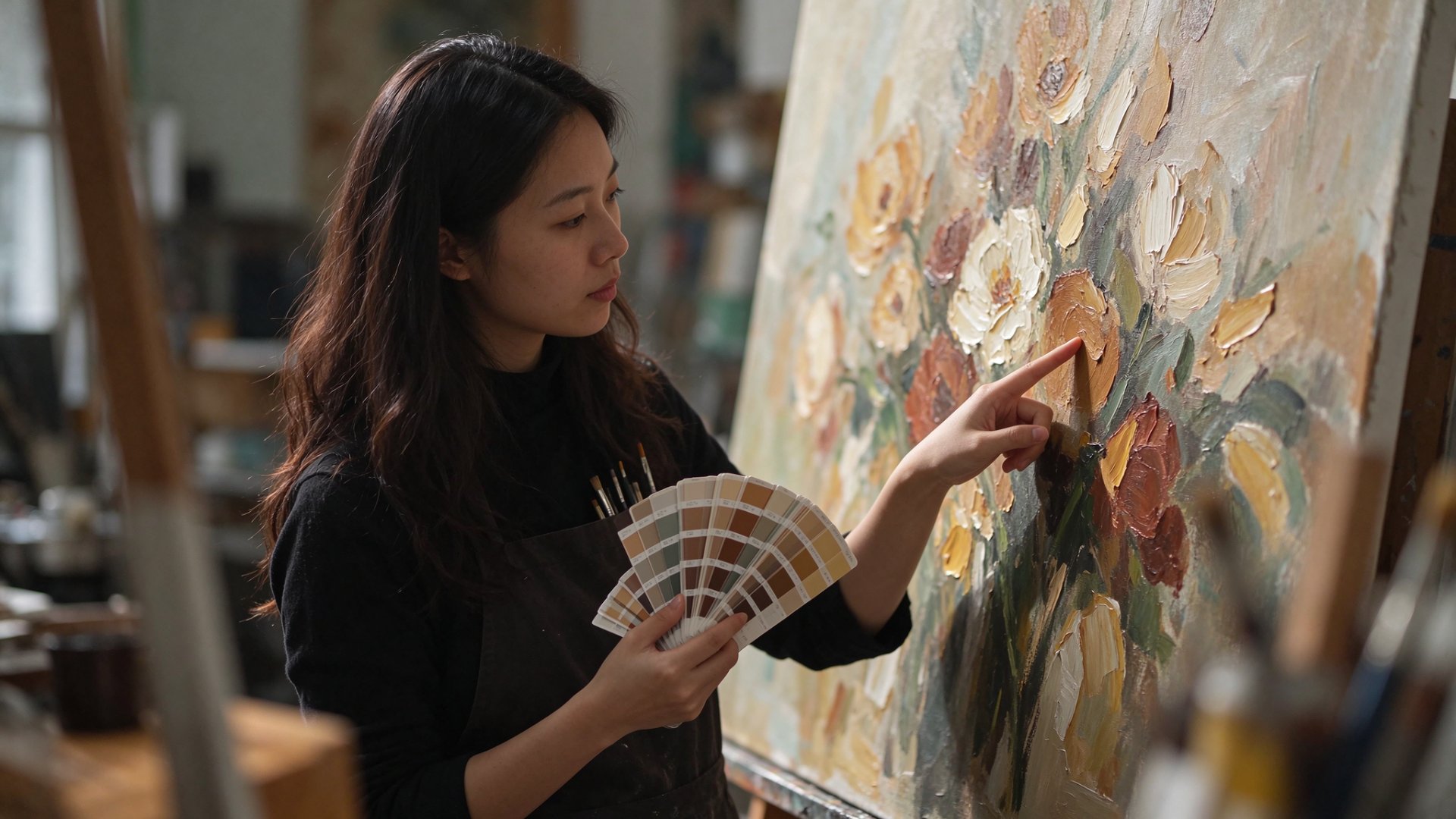
- If a colour code is part of your brand standard, send the code plus a physical swatch. Screen colour and pigment colour rarely agree, and the swatch wins.
Put the viewing light in the brief
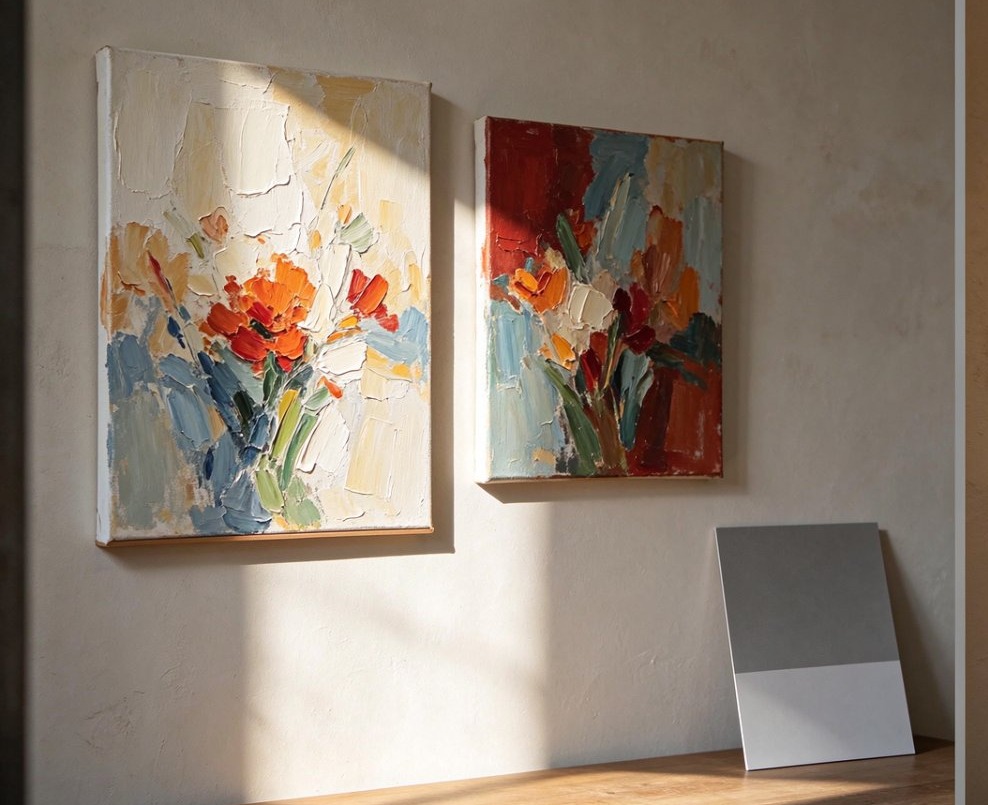
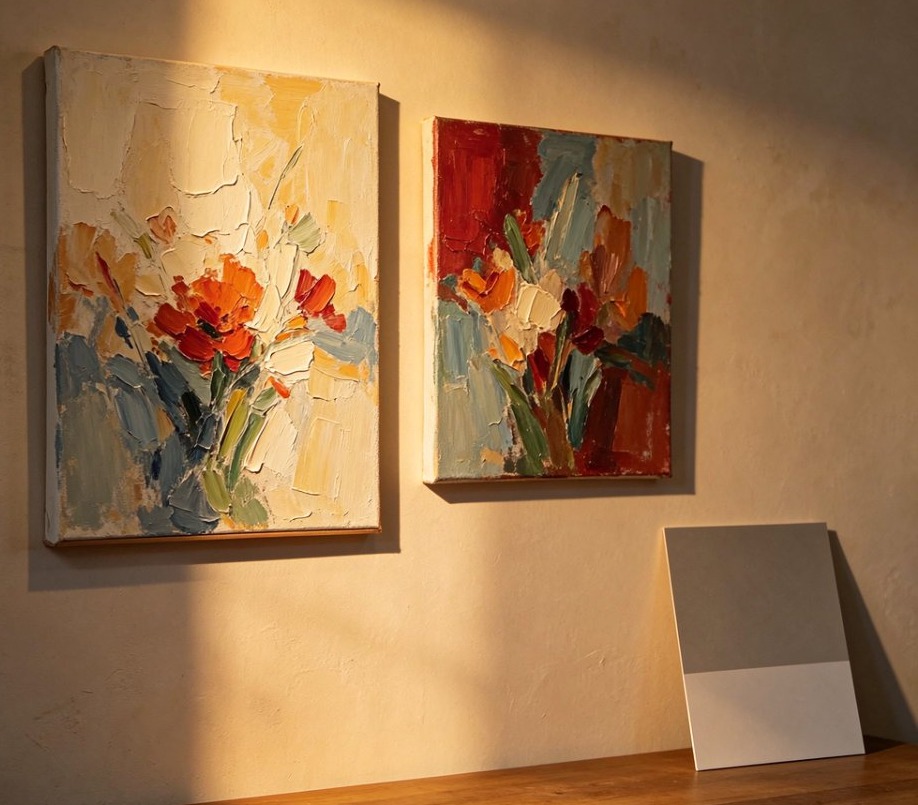
- Ask for the sample and the finished pieces to be assessed under the same light source. Warm indoor lighting and daylight read very differently on blues, greys and off-whites.
- Request unfiltered approval photos with a plain white or neutral grey card in the frame, so a colour cast is visible rather than assumed.
- Write the agreed light condition into the spec sheet. It is the cheapest form of quality control on a repeat run.
Approve one sample from the real materials
- Ask for a finished piece, or a painted section, made with the same canvas, primer and paint line planned for the batch. A reference printed on paper behaves differently from one painted on primed canvas.
- Mark and date the approved sample, photograph it, and keep it at the workshop as the working reference for the whole run.
- Note acceptable tolerance in plain words — for example, “background may read slightly warmer” — rather than leaving it to interpretation.
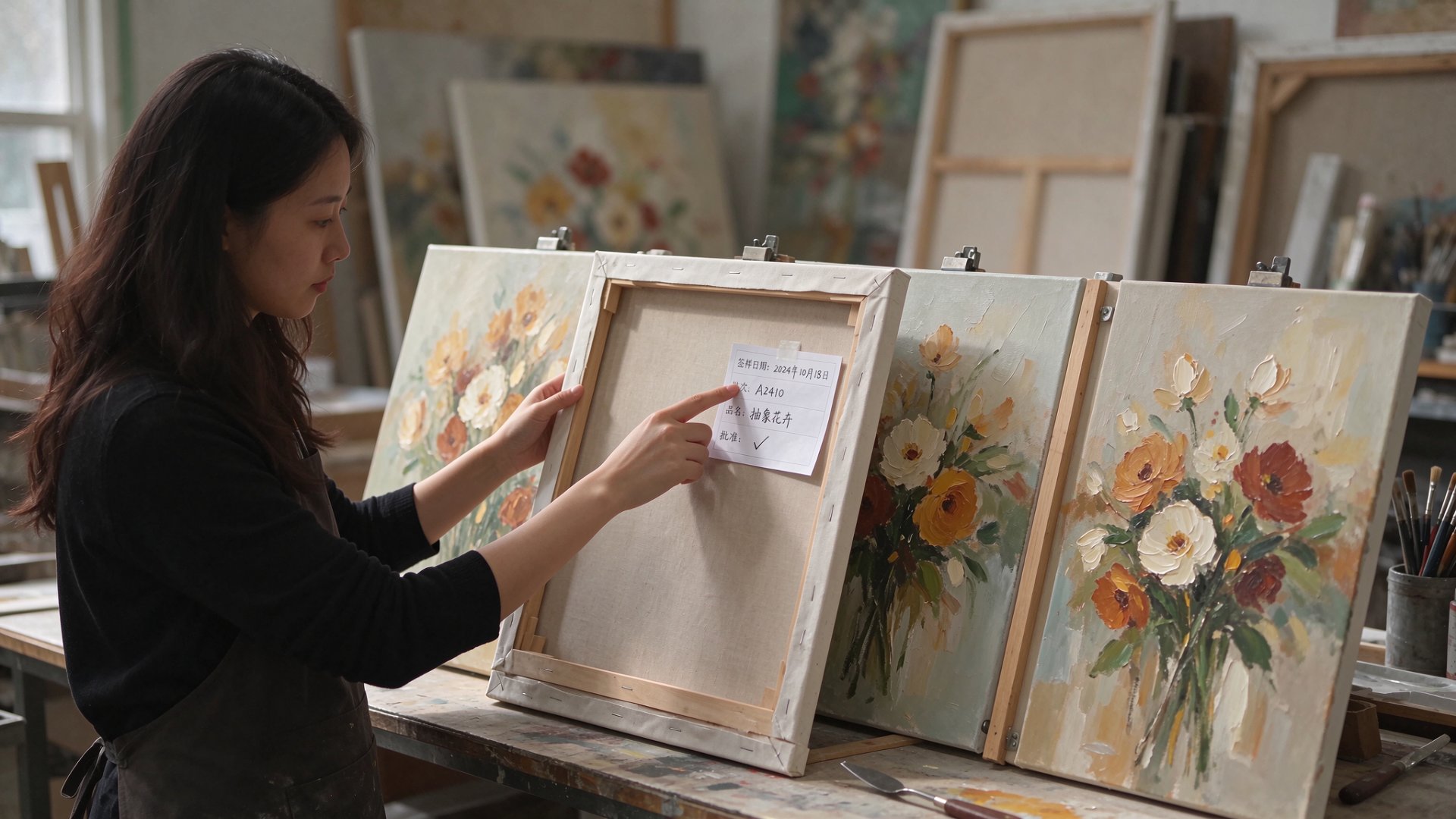
Keep the brief stable while the set is painted
- Reuse the identical reference files, size specifications and surface finish for every piece. Changing the reference halfway through creates a visible step between earlier and later pieces.
- If several canvases will hang together on one wall, say so in the order. Pieces painted and reviewed side by side are far easier to even out than pieces finished in isolation.
- Keep the approval photos with the order record. On the next reorder they are more useful than a written description alone.
One last check before packing
Compare the finished pieces together, under the agreed light, rather than one at a time. Photograph the full set in the arrangement it will be viewed in and archive those images with the order. That single habit makes later reorders considerably easier.
Jinyi Art has produced hand-painted canvas wall art from its Fuzhou workshop since 1998. Available formats and sizes are listed on the products page, and the factory page shows the workshop where these pieces are made.